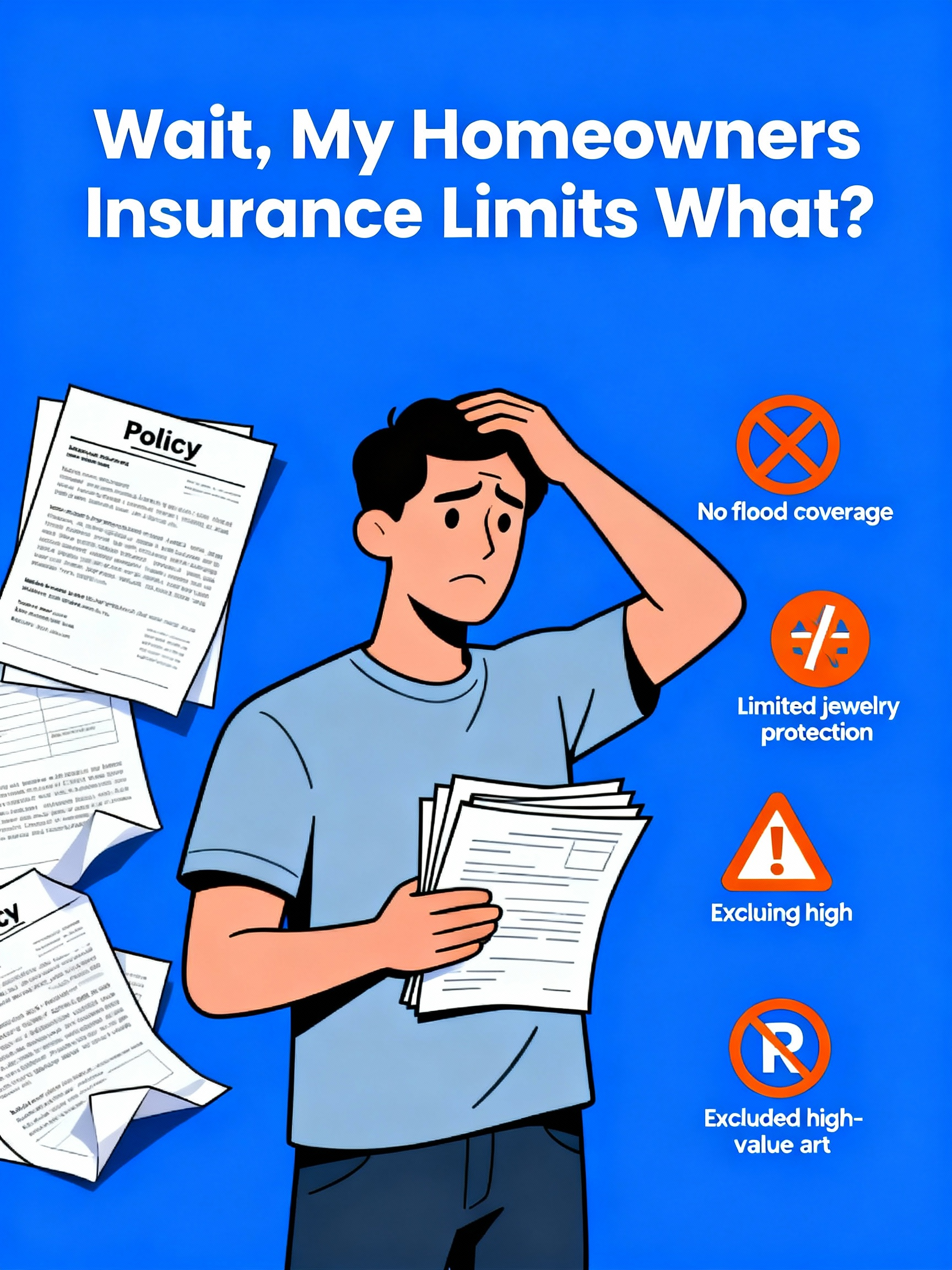
When you buy homeowners insurance, you expect protection for your house — the structure itself. You may also assume that your pool, landscaping and gazebo are included. And when you see “personal property coverage,” it sounds simple: coverage for your stuff.
But many items inside your home come with strict payout limits — and those limits may surprise you. Here are the most common categories with caps and what you can do about them.
Common Personal Property Limits You Should Know
Whether you’re Thurston Howell III or Oliver Twist, almost everyone owns at least one piece of jewelry — a ring, necklace or family heirloom. Most homeowners policies limit jewelry and watches to around
$1,500. That amount doesn’t go far.
Speaking of small valuables, cash has even tighter limits. If you’re keeping dollars tucked between your mattresses, remember that most policies cover
$500 or less in cash or equivalents.
Firearms and ammunition also fall under limited categories, usually capped at
$1,000–$2,000.
Even everyday items have limits. Silverware and goldware typically cap around
$2,000, and the work-from-home gear you use daily may not be covered at all. Business property stored in the home often has
minimal or even zero coverage.
Your most used possessions — your smartphone, laptop, or desktop — may also have low limits, often only a
few thousand dollars total. And if you moonlight as the Grand Poobah of tuba-playing, know that
musical instruments carry their own caps, too.
Why Homeowners Policies Have These Limits
Before you curse your insurer for putting limits on so many things, consider why those limits exist — and how they benefit you.
Imagine you and your neighbor live in identical homes. You collect guns, jewelry and cash, while your neighbor is a minimalist with an electric car and little else.
The risk exposures are vastly different.
Insurers have two options:
- Assume everyone owns lots of high-value items and raise premiums for all, or
- Set limits on high-theft or high-value categories so the majority of households pay
less.
They choose option two, which keeps premiums lower for most people.
How to Protect Your High-Value Items
The good news: you’re not stuck with these limits.
Here’s what you can do:
- Increase limits on your homeowners policy. Many insurers allow optional endorsements that raise caps on specific categories.
- Get a scheduled items policy (also known as a
personal articles floater). These policies insure individual valuables — jewelry, watches, instruments, firearms, art and more — for their full appraised value.
- Bonus: they often cover more types of loss, including damage or misplacement, not just theft.
Policies vary, so ask your agent or broker specific questions about what matters most to you.
Know Your Coverage Before a Loss Happens
Understanding what your homeowners policy covers — and what it doesn’t — prevents painful surprises when a loss occurs. The limits mentioned here are just a sampling; your own policy will have additional categories worth reviewing.
A little preparation today can save a lot of heartache tomorrow.